Alpenblick summit visualizer – experience Austrian great Alps' viewshed
Interactive web experience that lets visitors see the reach of each Austrian summit — a viewshed computation for every peak in the country.
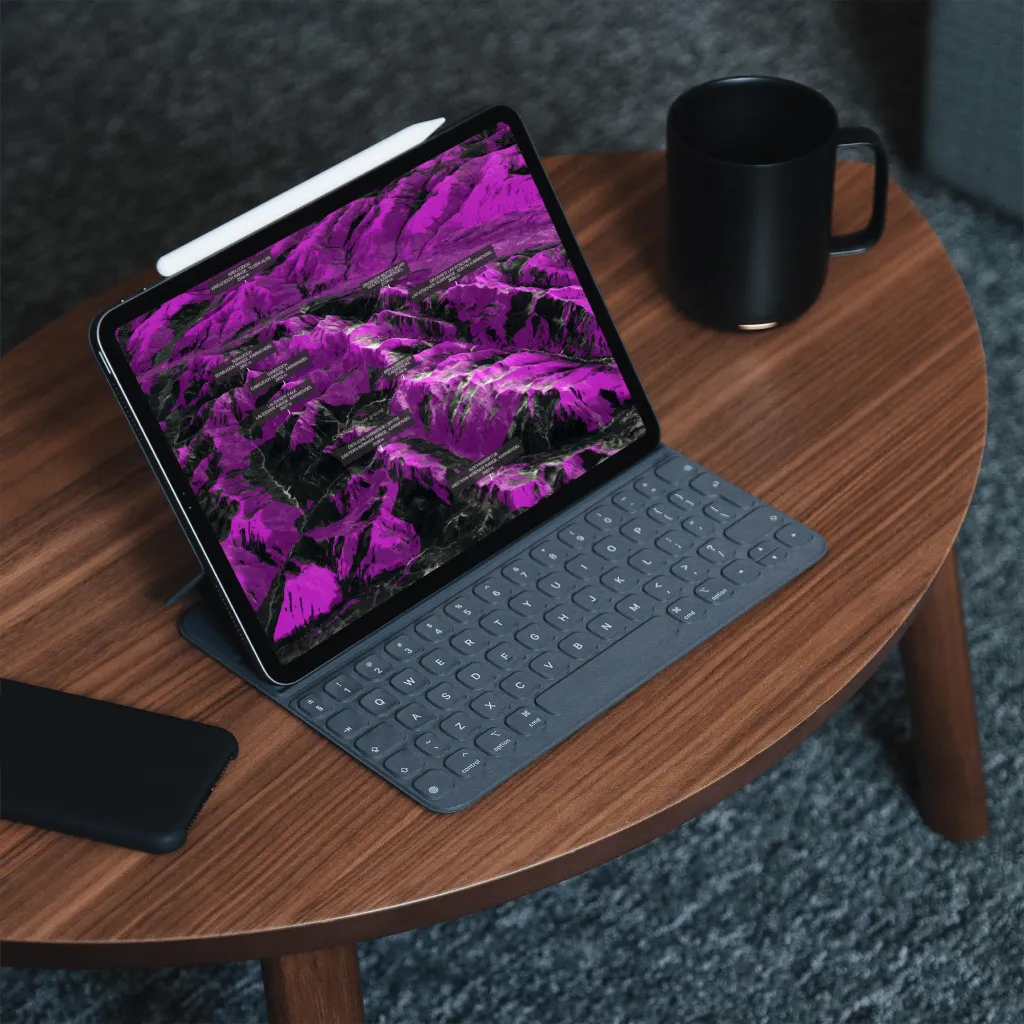
The Alpenblick Summit Visualizer turns a question that mountaineers have asked for a century — what can you actually see from the top? — into a direct, interactive answer. Pick any peak in the Austrian Alps, and the map reveals the viewshed: the precise terrain within 100 km that is geometrically visible from the summit.
The problem
Topographic maps tell you where the mountain is, but not what you'll see once you get there. Guidebooks list named peaks, but the actual visible surface — all the slopes, valleys, and far ridgelines that sit in the line of sight — is left to imagination or cloudy summit photos.
The approach
The project pulls together three data sources: the Austrian federal digital elevation model at 10 m resolution, the peak catalog from OpenStreetMap, and an opacity-layered rendering pipeline in CesiumJS.

For each summit, a pre-computed viewshed is rendered as a translucent overlay on the 3D terrain. Slopes that the summit can see stay bright; unreachable terrain dims to near-transparent. The viewing distance is capped at 100 km — beyond that the curvature of the Earth removes most realistic line-of-sight.

What it does well
The visualization runs in the browser at 60 fps on a mid-tier laptop. The opacity-based approach reads clearly even in the alpine density of peaks, where a simple binary visible/not-visible shading would collapse into noise. Pick any peak from the search, and the viewshed updates in under a second.
Data pipeline
- Open government data — Austrian DEM at 10 m resolution (BEV / basemap.at)
- Peak geometry — OpenStreetMap filtered to
natural=peakin Austria - Viewshed pre-computation — GDAL + custom GPU passes; output stored as compressed PNG tiles keyed by summit ID
- Rendering — CesiumJS terrain tiles + custom imagery provider for the viewshed overlay, switchable at runtime
The pipeline is offline-first: all viewsheds are pre-computed, so the runtime interaction is purely rendering.
What I learned
The hardest problem wasn't the geometry. It was making the visualization legible at different zoom levels without becoming either confetti (too many overlapping viewsheds) or reductive (one summit at a time and nothing else). The opacity-based layering, tuned per elevation band, is what made the experience feel like a map you can read rather than a dataset you can query.